CASE

Belzona Offers Protection to New Floating Head

Problem

Deterioration of the surface due to erosion/corrosion by in-service conditions.

Industry

Oil & Gas

Application Date

2015

Location

Toronto / Canada

Equipment Application

HEX-Heat Exchangers

Subtrate

Steel

Product

Belzona 1321 (Ceramic S-Metal)

Repair Stages

Application Situation

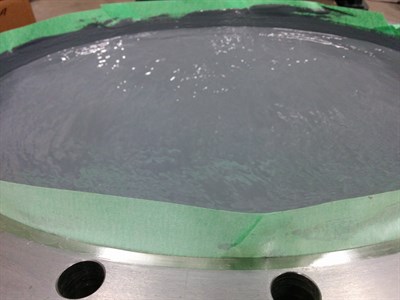
Floating head. -Surfaces abrasive blasted being masked prior to coating

Application Method

The application was carried out in accordance with Belzona Know-How System Leaflet HEX-3 for erosion/corrosion resistance coatings. Masking tape was placed at the outer edge of the rebate grooves in order to highlight the area to be coated and to give a neat and clean finish. Then, the selected Belzona product was mixed and an even coat was applied at the specified thickness, using stiff short bristled brushes. Then, it was made sure that the coating was finished into the rebate grooves. Wet film thickness gauges were used to ensure the recommended film thickness was achieved. The masking tape was removed immediately. Allow to cure before applying a second coat, where specified, of the selected Belzona product, again ensuring that it is correctly finished within the rebate grooves.

Belzona Facts

The manufacturer recognized as a world leader in the supply of specialized and standard shell and tube heat exchangers was looking to provide an extended service life to an oil and gas client in Ontario. To ensure optimum performance, a Belzona ceramic coating was selected to be applied at the construction stage.

Contact your nearest Belzona Consultant and schedule a free evaluation!

Other Cases

Repair And Coating for a Boiler Feed Pump

After 3 to 4 months in use the boiler feed pump was suffering from general corrosion/erosion and the metal shavings in the feed eventually would lead to a through hole in the casing.

Petrochemical Flange Encapsulation

Customer based in Sarnia, Ontario was having corrosion problems in several flanges of his plant. The protective paint that was used in the past would peel off, exposing the substrate, which lead to corrosion around the flange, studs and nuts.